The story
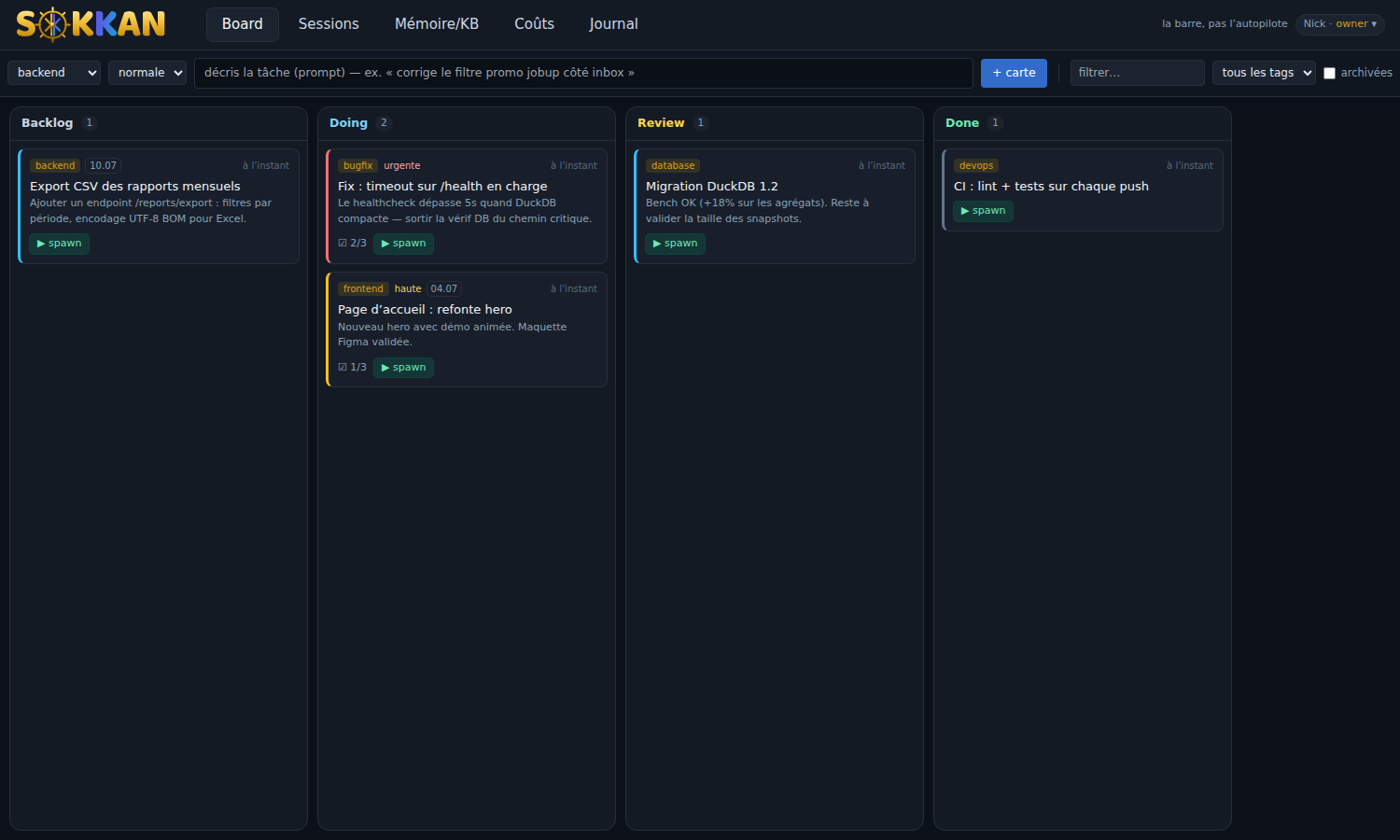
SOKKAN wasn't born in a pitch deck. It is the in-house tool that runs Ninabot's products — including the Swiss job platform ninjob.ch — through a dozen AI agent sessions working in parallel, steered by a single person.
The observation that started it: what AI agents lack isn't intelligence, it's memory. Every new session starts amnesic, and the operator spends their time repeating “check your memory, we were working on X”. SOKKAN inverts the ritual: opening a session means the memory has already been consulted. Describing the task triggers a local semantic search (no external service) across the notes previous sessions wrote — then the agent proposes a plan and waits for human clearance. Nothing irreversible without a click. Hence the name: sokkan, the helm. The helm, not the autopilot.
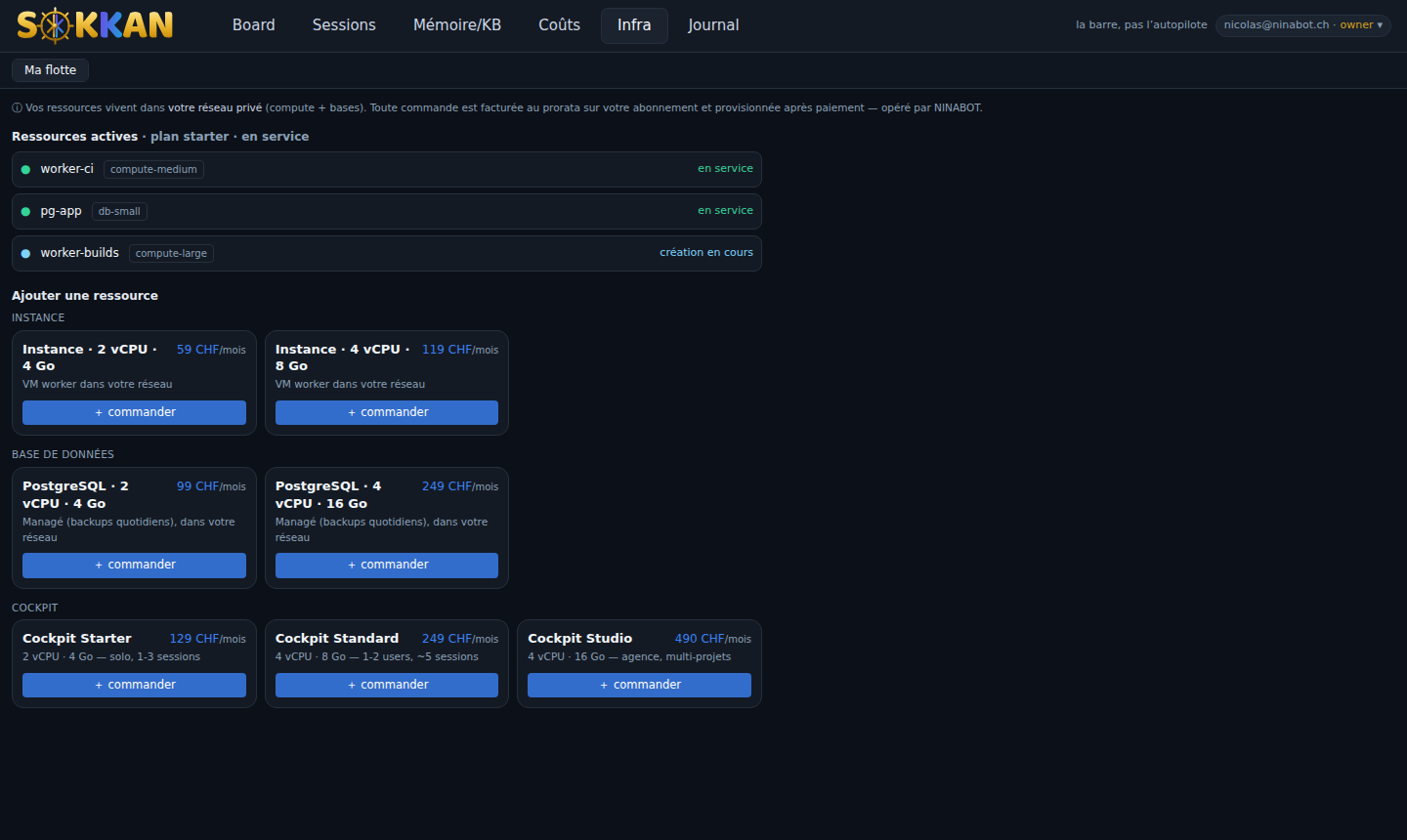
In July 2026 the tool was extracted and released as open source (Apache-2.0), installable with a single command from a sovereign distribution (sokkan.ch). In its wake, Ninabot opened SOKKAN Cloud: the same software, operated from Geneva — each customer gets a dedicated virtual machine and their own private network, both extensible from the cockpit (compute instances, managed PostgreSQL). For inference the customer chooses: their own Anthropic key, or managed inference — open Qwen3 Coder models served from Frankfurt (EU), prepaid with credits, metered per token, with request content never retained.
In September 2026, Ninabot joined Exoscale's ISV program: SOKKAN Cloud enters the partner product catalogue of the Swiss provider the offering has run on since day one. Both companies are preparing a joint case study.
“AI agent tools all look alike and all live on American infrastructure. We built SOKKAN to run our own products, then we opened it up: the code belongs to everyone, and for teams who want the operated version, everything stays in Switzerland.” — Nicolas Micaud, co-founder and CTO of Ninabot Sàrl